
.svg)
.svg)
.svg)
.svg)
.svg)



Therapy
Neural Therapy for Scar Treatment: How Scar Tissue Can Affect the Nervous System and Whole-Body Health
Scar tissue is often considered a cosmetic or localized issue. However, emerging perspectives in integrative medicine suggest that scars may have deeper physiological effects, particularly on the autonomic nervous system. One treatment approach that addresses this concept is Neural Therapy, a technique developed in Europe that uses local anesthetic injections to reset dysfunctional nerve signaling.
This article explores Neural Therapy for scars (Scar Therapy), including its origins, mechanisms, potential benefits, and current scientific understanding.

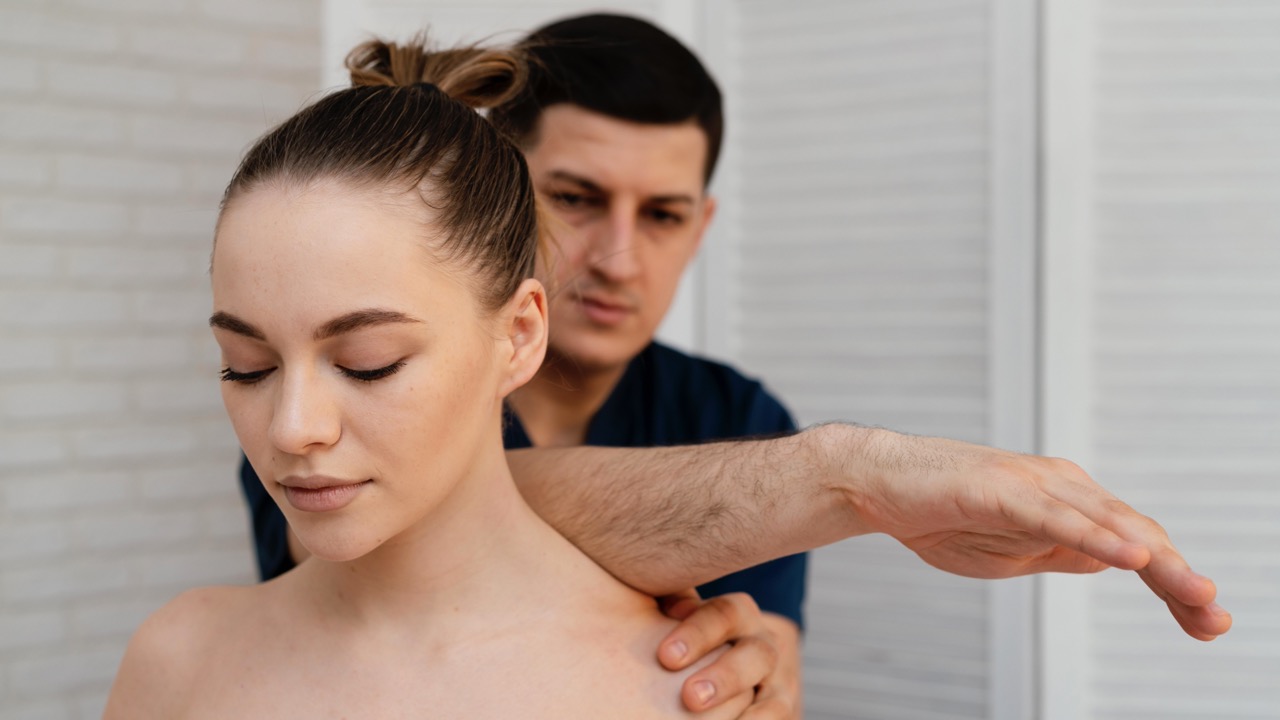
Neural Therapy is a medical treatment that involves injecting small amounts of local anesthetics, most commonly procaine or lidocaine, into specific areas of the body such as scars, nerves, trigger points, or autonomic ganglia. The goal is to restore normal function of the autonomic nervous system (ANS) and relieve chronic pain or dysfunction.
The therapy was developed in Germany by physicians Dr. Ferdinand Huneke and Dr. Walter Huneke in the early 20th century. Their work demonstrated that local anesthetics could have therapeutic effects beyond simple numbing.
Over time, neural therapy became widely practiced in parts of Europe, Russia, and Latin America, particularly for chronic pain conditions.
The concept of scar therapy in neural therapy arose from a surprising clinical observation known as the “Huneke phenomenon.”
In a well-known case, a patient with a chronic frozen shoulder experienced immediate relief after an injection of procaine into a distant surgical scar on her leg. The scar had been acting as an “interference field”: a region of abnormal nerve signaling that affected another part of the body.
This observation led to the hypothesis that old scars may disrupt nervous system regulation and trigger symptoms elsewhere in the body.
A core principle of neural therapy is the concept of the interference field.
An interference field is defined as damaged or chronically irritated tissue that disrupts normal nerve signaling within the autonomic nervous system.
Common interference fields include:
Because the autonomic nervous system regulates organs, circulation and pain perception, disturbances in one location may produce symptoms elsewhere in the body.
When the skin is cut during surgery or injury, sympathetic nerve fibers embedded in the skin are also damaged. If these nerves heal abnormally, they may send irregular electrical signals to the nervous system.
Researchers describe scar interference fields as areas of:
Some clinicians describe scars as creating “chaotic and noisy sympathetic nerve activity.”
These disruptions may theoretically contribute to conditions such as:
Another explanation involves cellular membrane potential.
Healthy cells maintain an electrical charge across their membranes that allows proper nutrient exchange and signaling. Scar tissue may disrupt this electrical balance, impairing cellular communication and healing.
Neural therapy injections may help by:
Local anesthetics like procaine may temporarily block dysfunctional nerve signals, giving the nervous system an opportunity to reorganize normal communication patterns.
Scar therapy is a relatively quick outpatient procedure.
Typically, multiple sessions (often 2-4 treatments) may be required for optimal results.
While research is still developing, neural therapy practitioners report benefits for various conditions, including:
These symptoms may occur because scars can influence the autonomic nervous system, which controls many involuntary bodily functions.
Although neural therapy has been practiced for nearly a century, high-quality clinical research remains limited.
Most available data consists of:
Some integrative medicine practitioners report rapid symptom resolution in certain cases, sometimes described as a “lightning reaction”, where symptoms disappear immediately after treatment.
However, mainstream medicine generally calls for more randomized controlled trials to validate mechanisms and clinical effectiveness.
Neural therapy is generally considered low risk when performed by trained practitioners, because it uses small doses of commonly used local anesthetics.
Potential side effects may include:
Serious complications are uncommon but possible if injections are improperly administered.
The concept that scars may influence systemic health via neural pathways is gaining interest within integrative and functional medicine.
Modern fields that intersect with neural therapy include:
As research into the bioelectric properties of tissue and the autonomic nervous system advances, scar therapy may receive greater scientific attention.
Neural therapy scar treatment represents a fascinating intersection between neuroscience, regenerative medicine, and integrative healthcare. By targeting scar tissue that may disrupt autonomic nervous system function, practitioners aim to restore normal nerve signaling and alleviate chronic symptoms.
Although the therapy has a long clinical history and many anecdotal successes, further rigorous research is needed to fully understand its mechanisms and therapeutic potential.
For patients suffering from persistent pain or unexplained symptoms after injury or surgery, neural therapy may represent an emerging therapeutic approach worth exploring under qualified medical guidance.
Share today:
.svg)
.svg)
.svg)
.svg)
.svg)
.svg)
.svg)